Control what your AI agents can do, enforced in the kernel

Every agent, with someone accountable
Each agent is listed with its owner, the key it holds, how many tools it has, and what it has been stopped from doing.
OAuth 2.1
OpenID Connect
SAML 2.0
SCIM 2.0
Passkeys
OpenID CIBA
Shared Signals
Model Context Protocol
Open standards on the wire. Zero-Code is our own.
Runs in any cloud
Signs people in from
Reports and alerts to
A new kind of identity provider. Most stop at the token. AuthFI gives every AI agent an identity, and then follows it to the machine it runs on, where anything nobody granted is refused.
An identity
Each agent holds its own key and has a named person who answers for it. No shared secret to copy.
A boundary
It can reach what it was granted. Everything else is refused on the machine it runs on.
An off switch
Revoke it once. New tokens stop, and every enforcement point is told.
What changes for the business
Four results, without a new team to run them.
Why AuthFISay yes to AI agents
Security can approve an agent, because each one has an owner, a limit and an off switch.
One platform, not four
Staff sign-in, customer sign-in, cloud and server access and agent control, on one bill.
Ready for the audit
One record of who did what, for people and agents, sent to the tools you already use.
No rewrite
It protects the services you already run. Nothing in your applications changes.
AI agents
and approvals
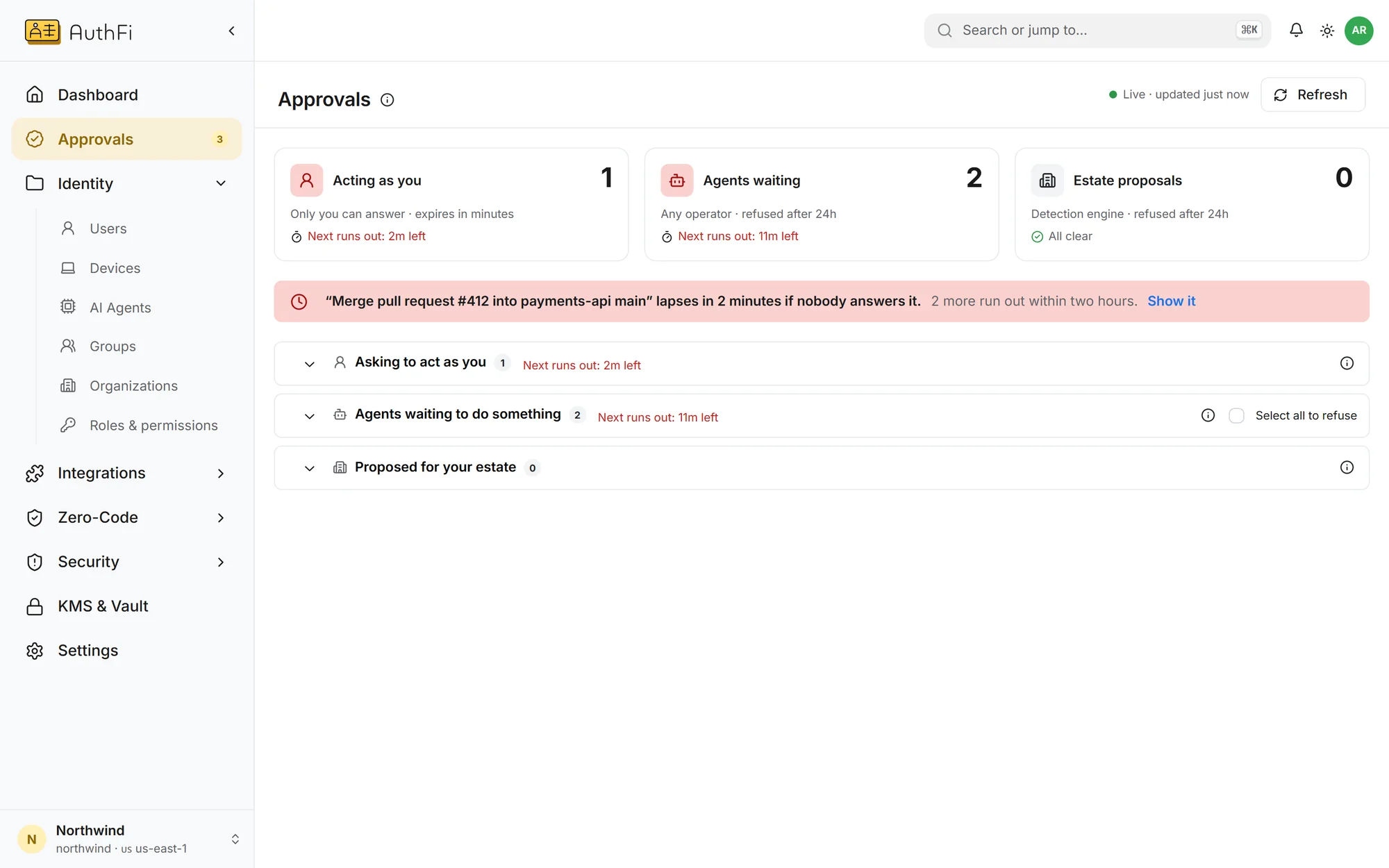
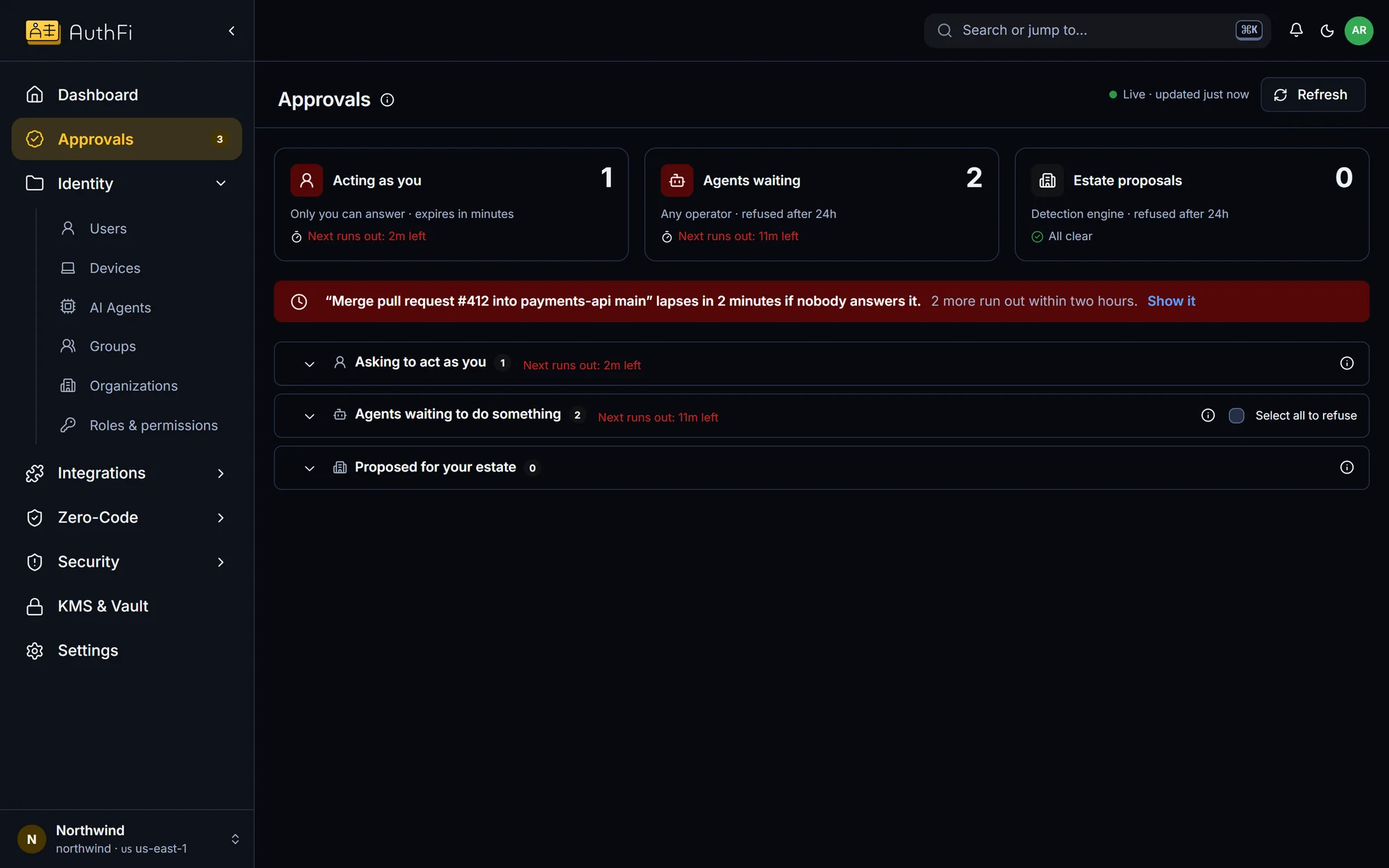
Give each agent its own identity, limit what it can do, and put a named person in the loop for the actions that matter.
Learn moreinvoice-bot
acting for Ada Rao
Give every AI agent
a boundary
A prompt injection, a bug or a stolen credential can turn an agent against you. Inside a boundary it can only reach what you granted. Nothing you did not grant can reach it either. The wall is the kernel of the machine it runs on, so the agent cannot argue with it.
Below the agent
The rules run as eBPF programs in the Linux kernel. The agent’s code, its model and its prompt all run above them and cannot edit them.
Nothing to cooperate with
No SDK in the agent, no instruction in the prompt, no guardrail the model has to respect. The agent does not need to know the rule exists.
It works both ways
The wall faces outward too. A person, a service or another agent that was not granted is refused before the request reaches the agent.
Refused before it happens
A connection that was not granted never leaves the machine. It is stopped, then recorded. It is not noticed afterwards in a log.
Zero-Code auth
and enforcement
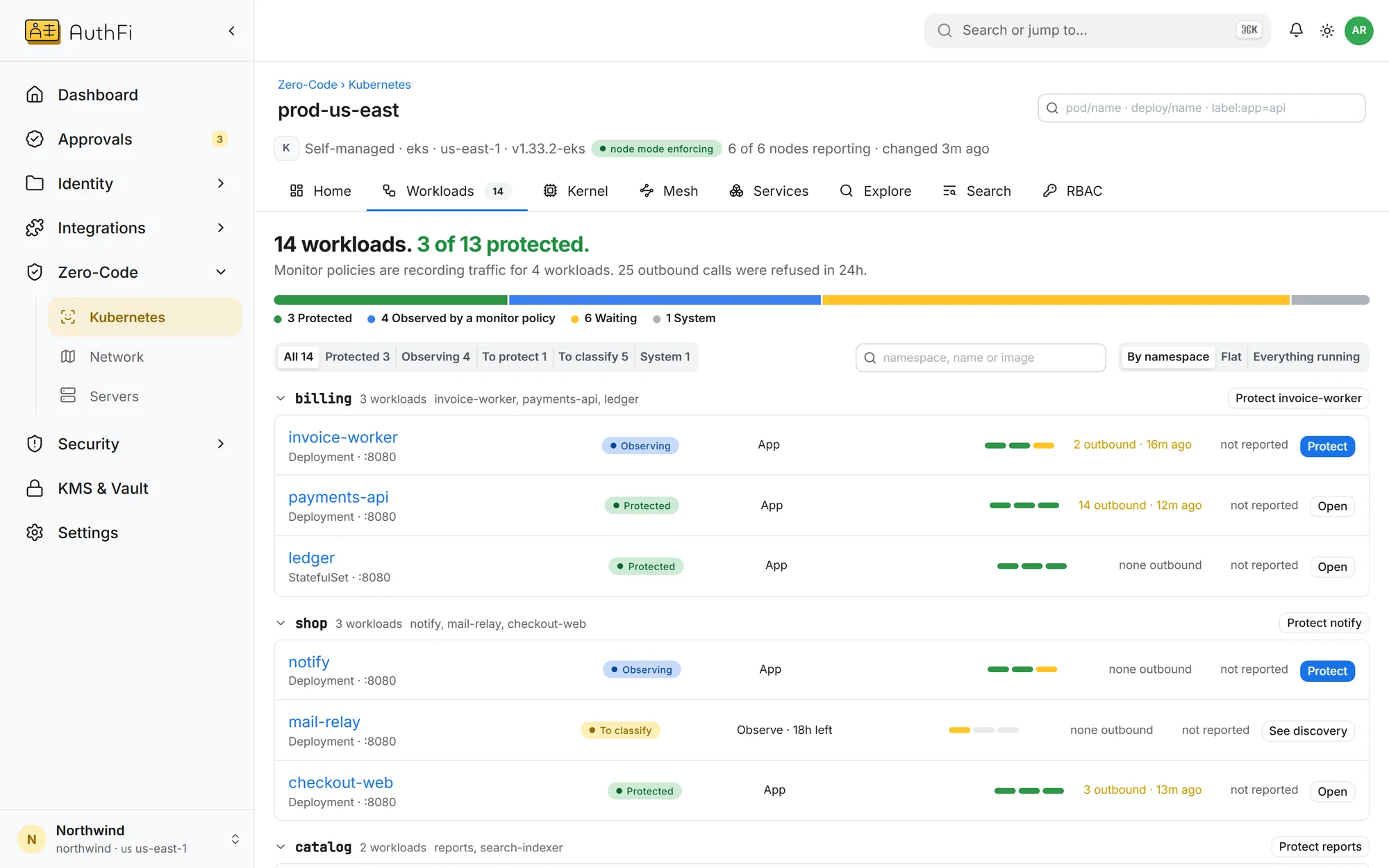
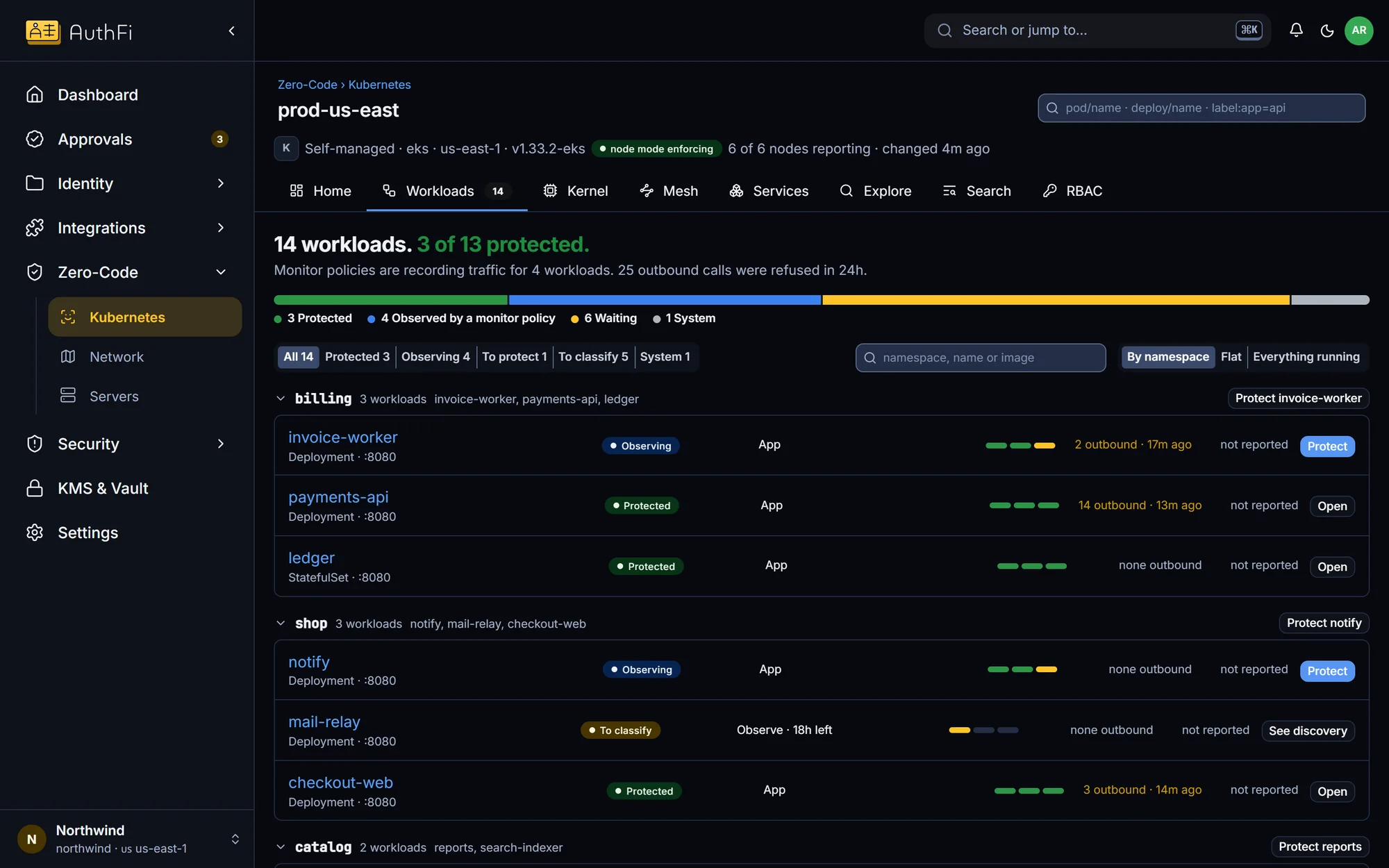
Our own technology, and two things in one. Install once on a cluster: AuthFI signs people in to every service, and enforces what each service and agent may reach, on the node, with no SDK and no change to the application. Built on eBPF, in the Linux kernel.
Learn moredeploy-helper
platform · prod-us-east
The connection never left the machine. The agent’s code was not changed.
Sign-in
and directory
Everything an identity provider is expected to do, under your brand. This sign-in page is live: try it with any email and password.
Learn moreNorthwind’s sign-in page, not ours
Their logo, colour, headline and domain. Nothing on the page says AuthFI. This is the real hosted sign-in page, running on example data.
Type any email address and press Continue. Or press Create an account.
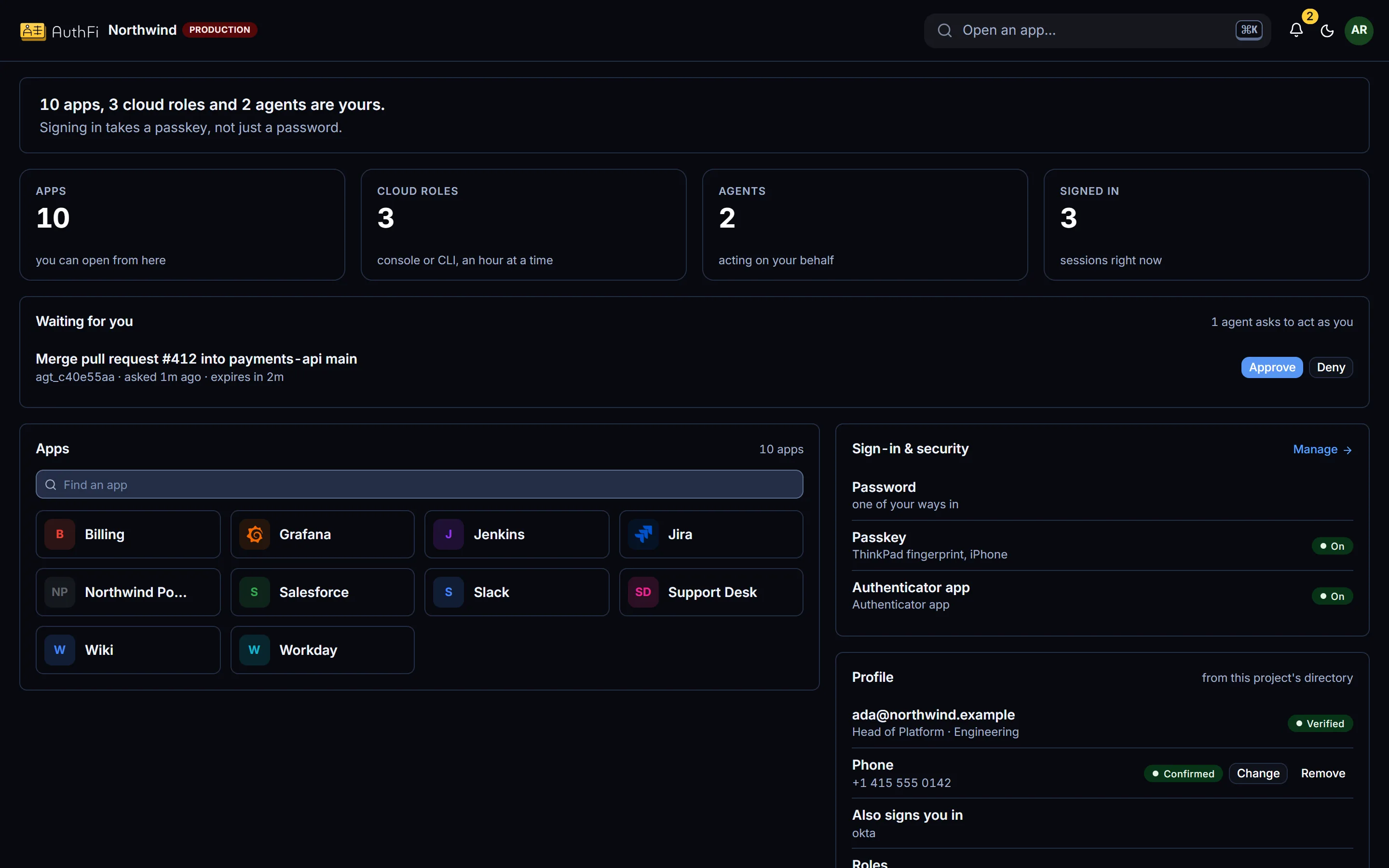
And this is where they land.
Each person gets a workspace: the apps they can open, the cloud roles they can assume, the agents acting for them, and what is waiting on their answer.
The workspace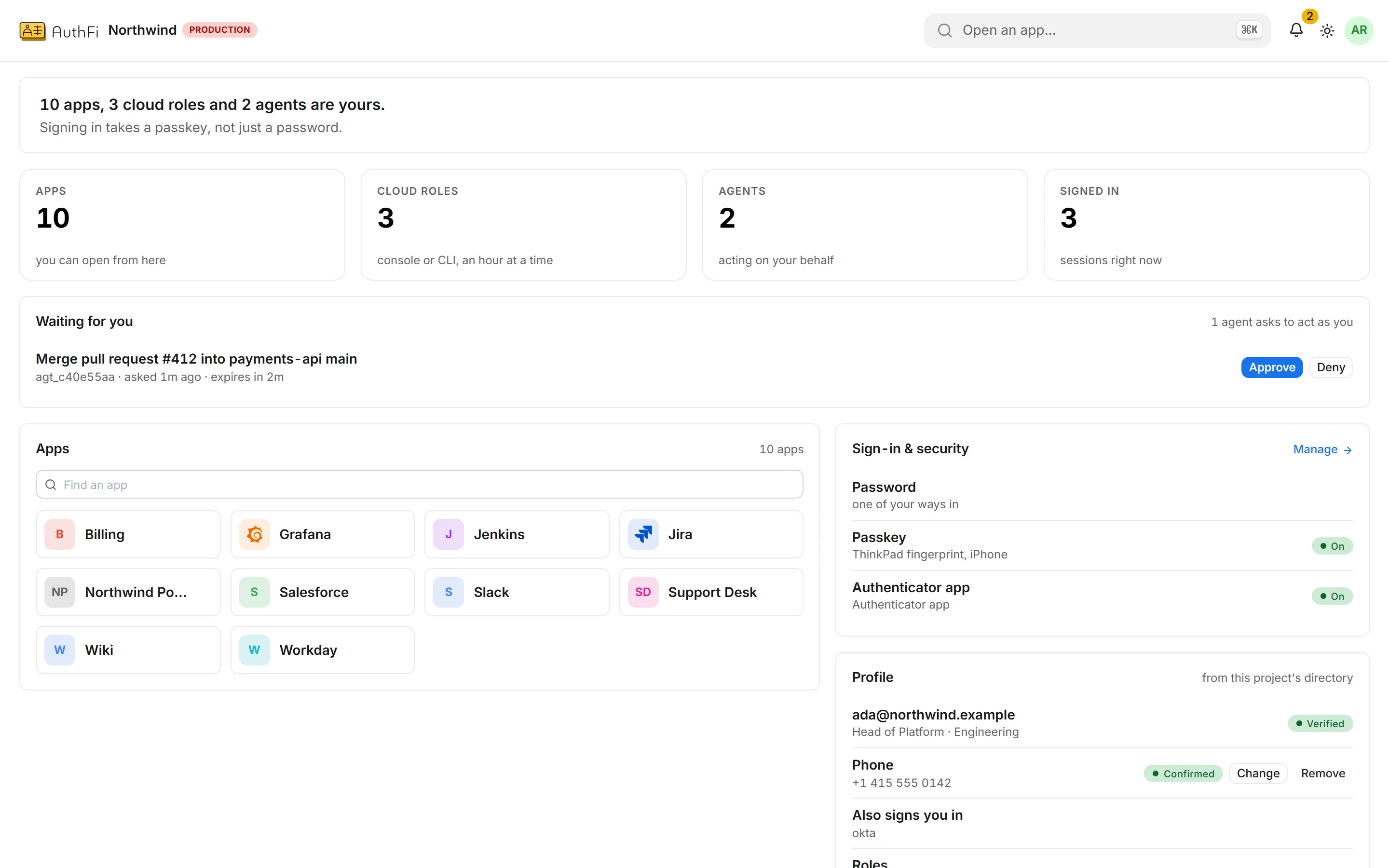
Access, keys
and the record
Cloud roles and servers reached with credentials that last minutes, signing keys per project, and one record of who did what.
Learn moreDev Patel
bastion-01


Security you
can check
Nine screens in the console answer the questions a security team asks: what was refused and where, which rules actually bite, how you stand against a framework, who is signed in, and who did what.
Security

Where it stands
AI Auth and the MCP gateway
Agent identity, limits, approval by a named person, and one gateway for every tool.
Available
Zero-Code on Kubernetes
Sign-in and enforcement on the node, with no change to the application. Starts in watch-only.
Available
Managed devices
Sign in to the machine itself, on Windows. The device key stays in its own hardware.
Pilot
AI gateway
The same identity, limits and record, applied to the calls agents make to models.
In development
Plans with
your users included.
Each plan includes staff accounts, customers and AI agents. Past that you pay published rates. Run it in our regions, or in any cloud of your own.
Compare plansTeam
$999
a month
Sign-in for your staff and customers, and your first AI agents. Up to 50 staff accounts included.
Professional
$3,999
a month
Adds enforcement on your clusters, cloud IAM federation and server access. Up to 250 staff accounts included.
Enterprise
Custom
Everything at volume rates, in any cloud of your own, under an SLA.